Stretch Tutus
Stretch tutus are one of the most eye-catching and versatile costumes on stage, combining the elegance of a classical tutu with the comfort and freedom of movement offered by modern stretch fabrics. Whether you're looking for something delicate and romantic, bold and dramatic, or completely unique, almost any design can be brought to life.
Behind every beautiful stretch tutu lies a surprising amount of technical decision-making. From colour combinations, embellishments, and edge finishes to pleats versus gathers, tacking methods, skirt fullness, and overall silhouette, every detail influences the final look, movement, and performance of the costume.
This guide will walk you through the options available when designing your custom stretch tutu, helping you create a costume that is as practical as it is beautiful.
Pancake, bell, or romantic tutu?
Pancake tutus have a flat skirt that sits horizontally from the waist, creating a dramatic classical silhouette. Bell tutus flare gently from the hips with a softer, rounded shape, while romantic tutus feature a longer, flowing skirt for an elegant and ethereal look. Each style creates a very different effect on stage, and the right choice will depend on the overall aesthetic you're hoping to achieve.
Straight, scallops, or dags?
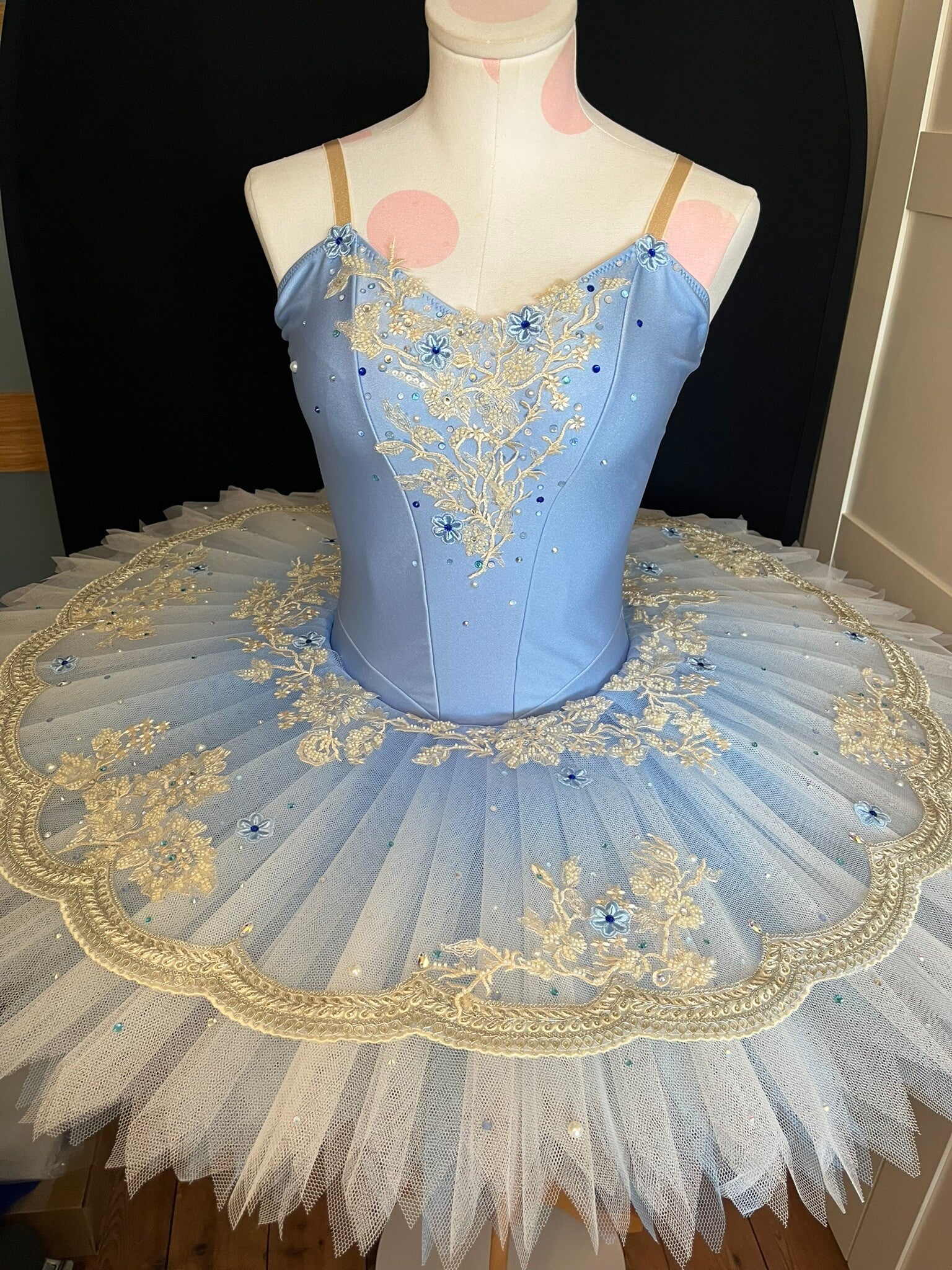
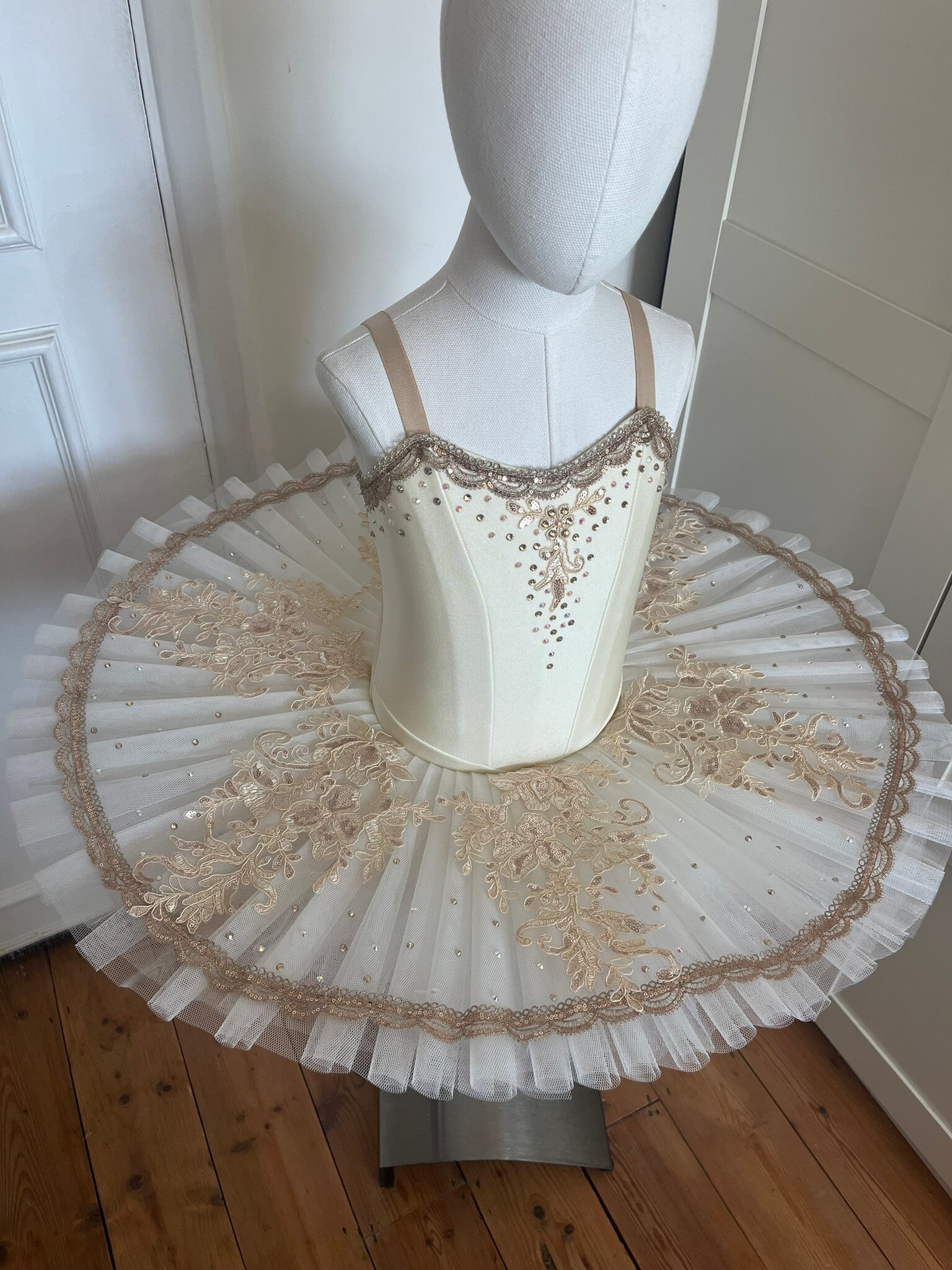
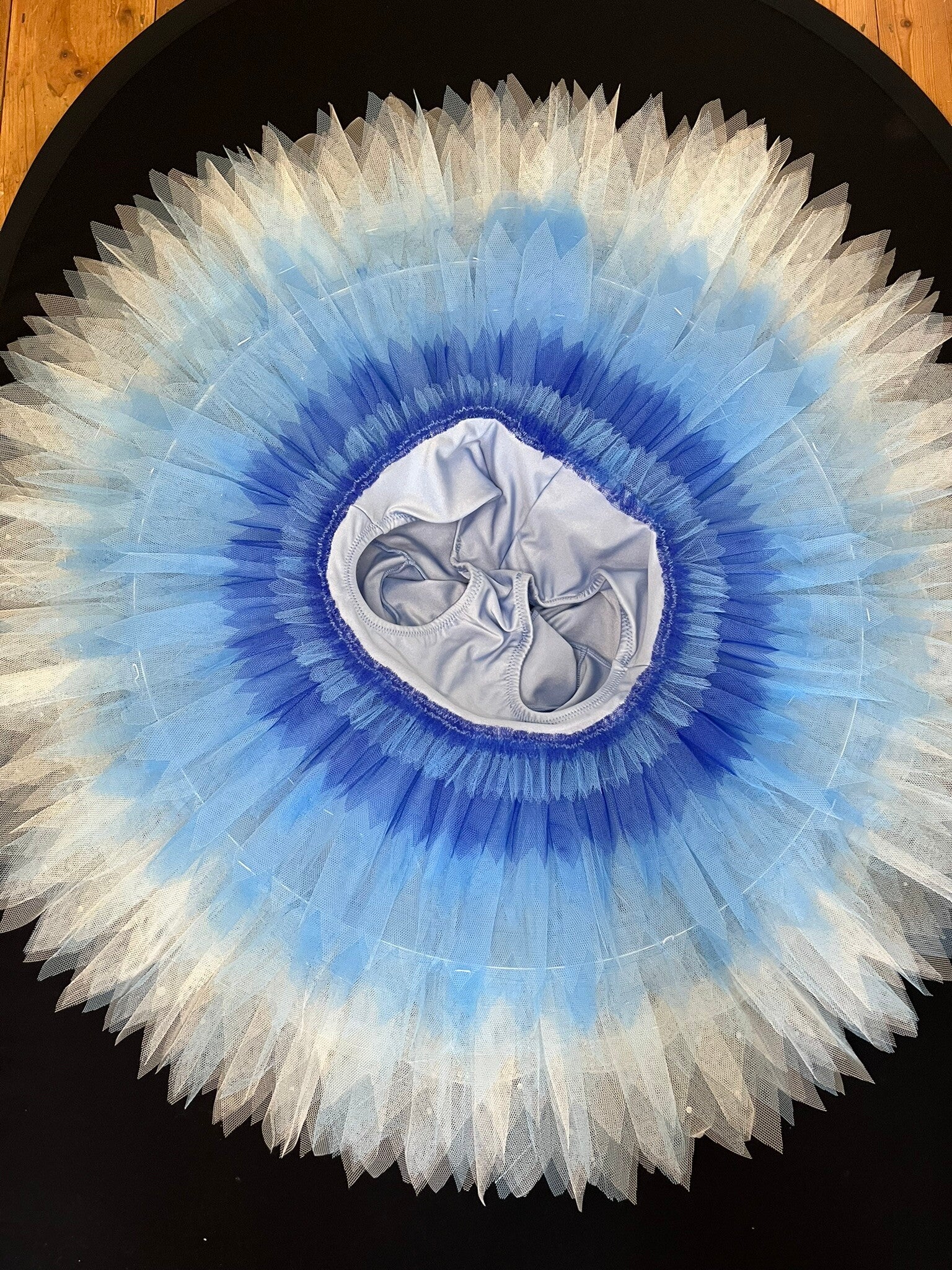
The edge treatment of each tutu layer has a surprisingly big impact on the finished look. Straight-cut edges are the simplest and most economical option and are commonly found on lower-cost tutus. For a more professional finish, I generally recommend either dagged or scalloped edges. Dagged edges create the classic pointed finish often seen in professional tutus and are particularly effective when blending multiple colours together. Scalloped edges create a softer, more romantic appearance, giving the tutu an almost flower-like silhouette. Straight edges can still be a sensible choice for very young dancers or when working to a tighter budget, but dagged and scalloped finishes will elevate the overall look of the costume. This tutu has a straight edge, while the cream one pictured below has dags.
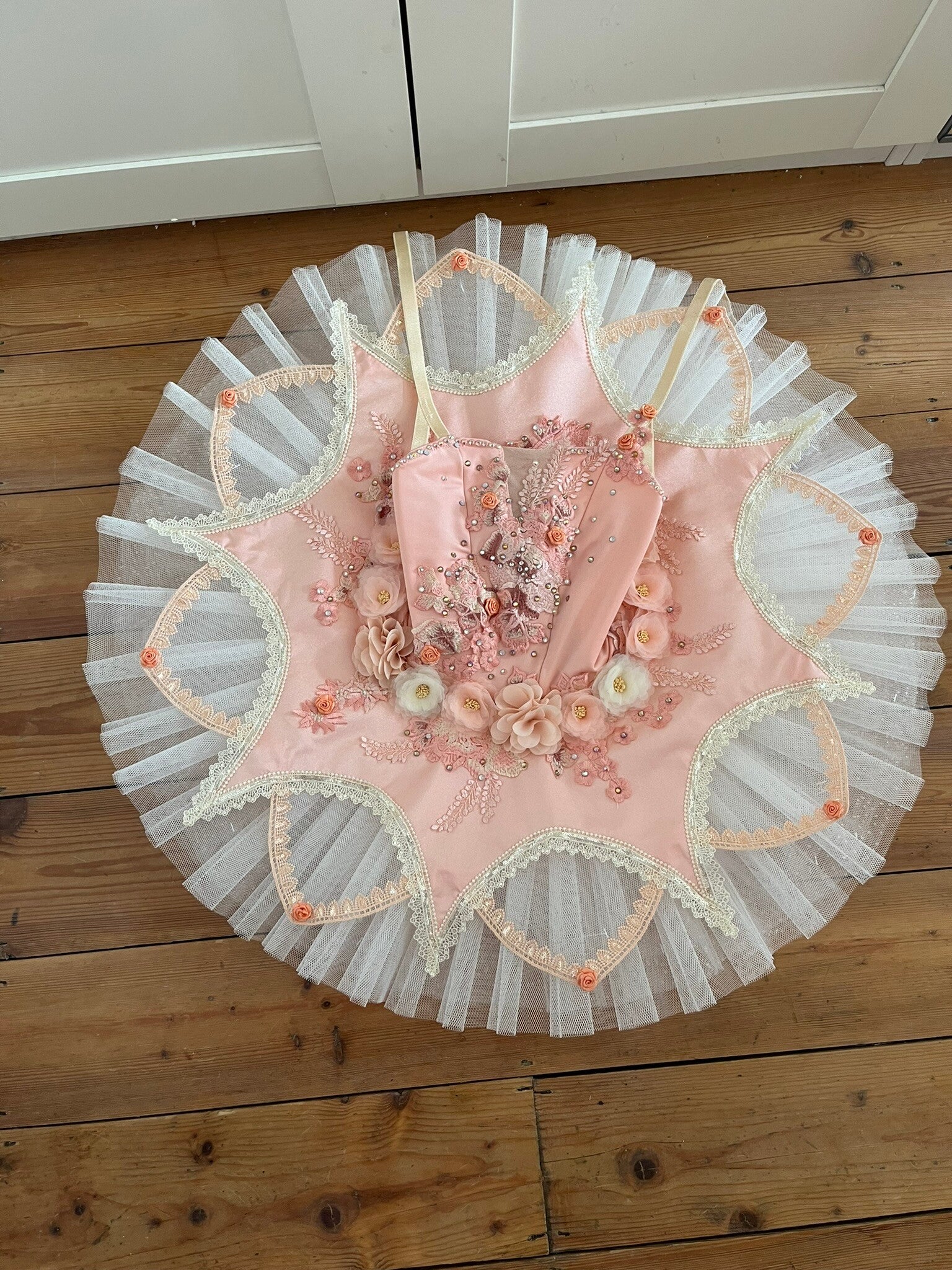
Plate or no plate?
A plate is a decorative layer that sits on top of the tutu, as seen on the peach tutu pictured. Plates can be used to introduce additional colours, fabrics, trims, appliqués, or embellishments, creating a more ornate and customised look. They are particularly popular for classical ballet costumes and themed designs where you want the skirt itself to become part of the visual storytelling. A tutu without a plate, like the blue one above, has a cleaner, more contemporary appearance and allows the shape, colour, and embellishment of the tutu layers themselves to take centre stage.
Pleats or gathers?
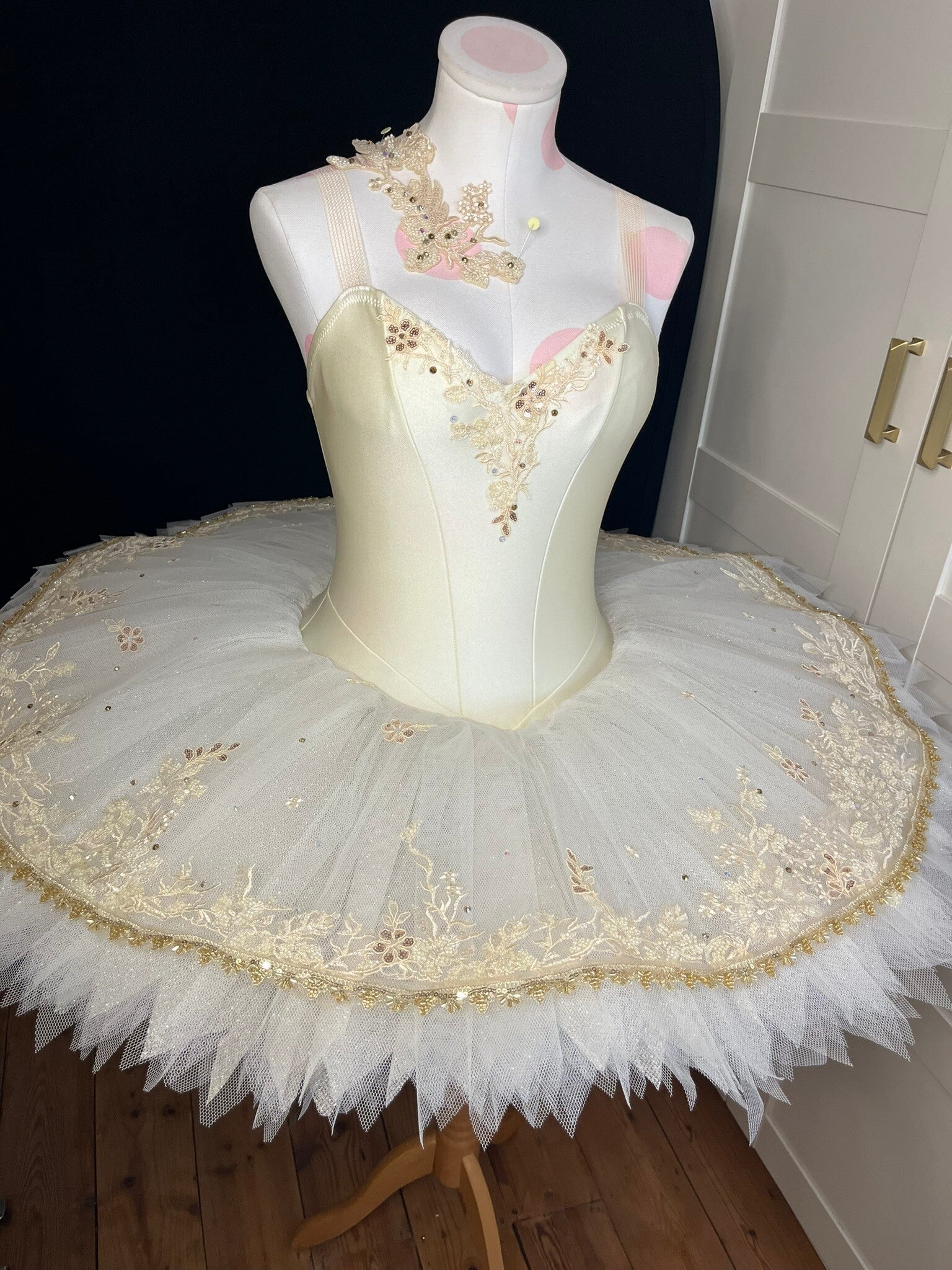
The way the tutu layers are attached affects both the appearance and flexibility of the finished garment. The tutu pictured here is fully gathered, creating a softer, fuller look and providing the maximum amount of stretch as the dancer grows. The other tutus shown on this page use pleats, which create a more uniform, structured silhouette often associated with professional classical costumes. My pleated tutus use hand-turned double-roll pleats on the top layer only, achieving the elegant appearance of a pleated tutu while helping to control costs and maintain the stretch and longevity of the garment.
Hand tacks or kimbles?
Tutu layers are tacked together to help the skirt maintain its shape, prevent the layers from shifting, and create a more consistent silhouette on stage. There are two main methods of tacking: hand tacks and kimbles. Kimbles are the small plastic fasteners often used to attach price tags to clothing. They are quicker and more economical to apply, extremely durable, and give the tutu a little more bounce and movement. If your tutu arrives with kimbles, please do not remove them – they are a structural part of the costume, not packaging!
Hand tacking is considered the gold standard and is the method used by professional ballet companies such as the Royal Ballet. Small hand stitches secure the layers together, creating a flatter, more solid-looking tutu with no visible fastening points. The tutu pictured here is hand tacked, primarily using invisible thread so that the tacking cannot be seen, with a heavier thread used around the hoop where additional strength is required. However, hand tacking is significantly more time-consuming and therefore more expensive, and may need occasional maintenance over the lifetime of the costume. The right choice will depend on your budget, aesthetic preferences, and how the costume will be used.

A tutu tacked with kimbles - almost invisible, but can be seen at the edges if you zoom in!